 Featured on

Enterprise AI has already gone through two generations.
The first generation was answer machines: systems that responded to prompts, surfaced information, and generated content.
The second generation introduced copilots and agents: systems that could assist users, suggest actions, and coordinate workflows across tools.
But Gen 2 systems still leave execution to humans.
A competitive briefing still comes back as recommendations. A reporting workflow still returns tasks. A sales preparation request still requires manual coordination across systems and teams.
The human remains the operator.
That model has reached its limit.
Gen 3: Autonomous Business Execution
The next generation of enterprise AI is not another copilot.
It is execution infrastructure.
Gieni ABX defines a new category: Autonomous Business Execution.
The model is fundamentally different:
- The user defines the outcome
- Gieni ABX plans execution across systems
- Logic 1 handles autonomous reading, analysis, reasoning, and synthesis
- Logic 2 requires human approval for any write, send, publish, or share action
- The system executes and delivers the finished result
This is not workflow automation. It is not orchestration software. It is not an agent framework.
It is an execution system.
Why the Market Is Moving Beyond Agents
Gen 2 AI systems improved access to information. They accelerated productivity. They reduced friction around tasks.
But they also created a new operational problem: humans became managers of AI-generated recommendations instead of executors of outcomes, widening the gap between decisions and outcomes.
More suggestions did not remove work. They redistributed it.
The result:
- More approvals
- More coordination
- More fragmented execution
- More operational overhead
Enterprises do not need another interface generating recommendations.
They need systems capable of completing business outcomes end-to-end.
Built for Enterprise Governance
One of the core barriers to enterprise execution systems is governance.
Most AI companies reduce governance to generic "human-in-the-loop" language without defining operational boundaries.
Gieni ABX uses a Logic 1 / Logic 2 execution model:
- Logic 1 actions operate autonomously for read, analyze, compare, classify, summarize, and synthesize operations
- Logic 2 actions require explicit human approval before any externalized action including sending, publishing, updating, sharing, or modifying systems
This creates a clear operational separation between autonomous intelligence and governed execution.
The result is enterprise execution without uncontrolled autonomy.
Beyond Copilots
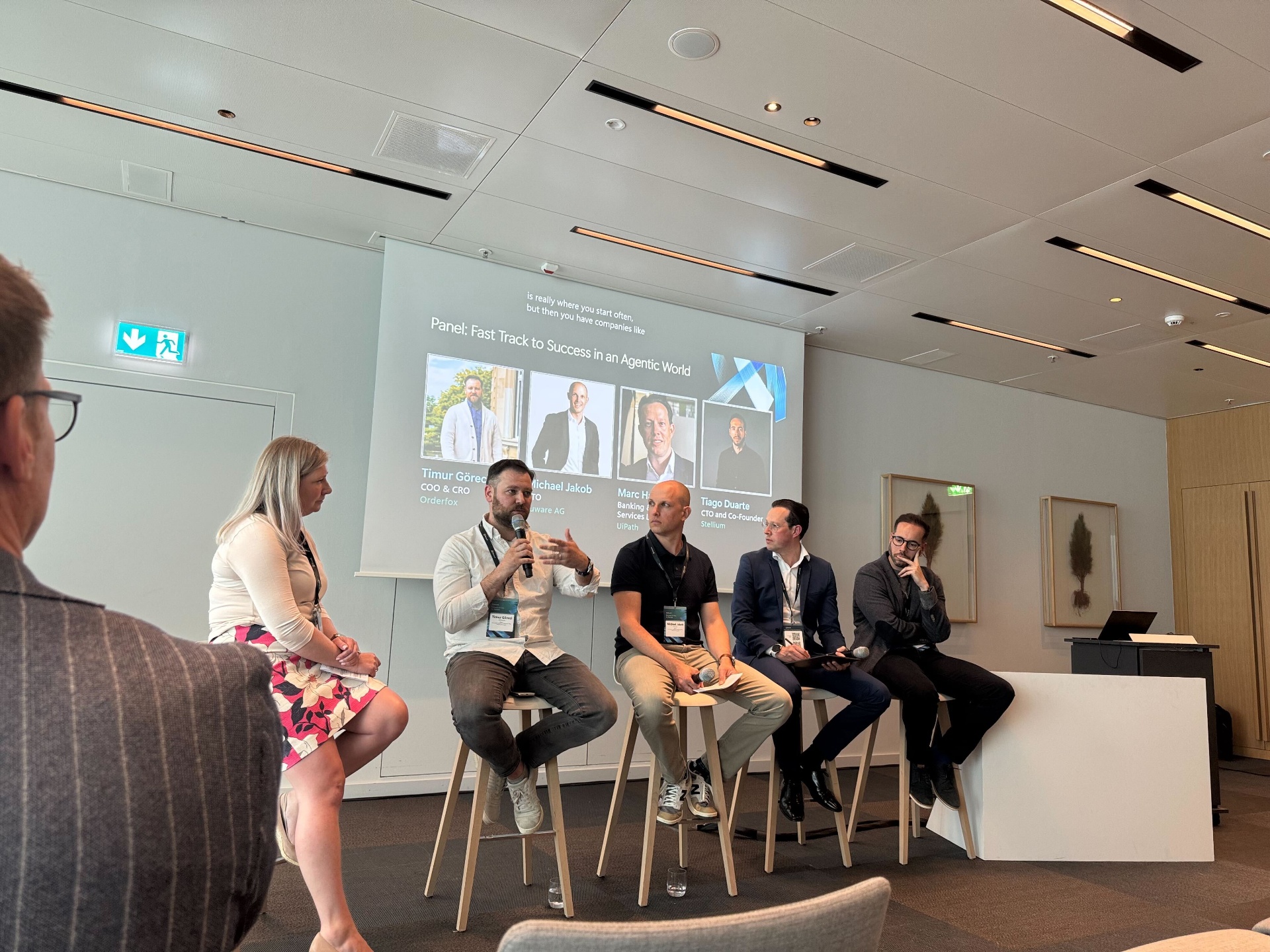
The Microsoft AI Tour for Partners discussion in Zurich reinforced a broader market reality: the enterprise AI market is moving beyond copilots and agents.
The next category is execution.
Gen 1 answered questions. Gen 2 assisted users. Gen 3 executes work.
Gieni ABX was built for Gen 3.